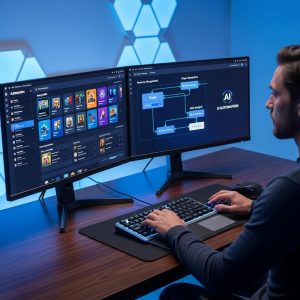
You’re drowning in games, but your library tracking is a mess. OpenClaw GOG fixes that-automating your entire game collection with smart agents that do the heavy lifting. No more manual updates, no more missed deals, no more cluttered lists. It’s fast, precise, and built to handle every title you own without breaking a sweat. If you want control, clarity, and zero wasted time, this is your fix. Stop guessing what’s new or what you own-OpenClaw GOG tracks it all, updates it all, and keeps you in the game. Ready to stop losing track and start owning your collection like a pro? This is how you do it.
Why OpenClaw GOG Beats Manual Tracking Every Time
Tracking your GOG game library manually is a relic of the past-slow, error-prone, and a colossal waste of time. Here’s the brutal truth: if you’re still updating spreadsheets, scanning pages, or toggling through dozens of tabs, you’re sabotaging your own gaming experience. OpenClaw GOG doesn’t just beat manual tracking; it obliterates it by automating every tedious step you hate. It’s not about convenience-it’s about efficiency, accuracy, and reclaiming hours you’ll never get back.Manual tracking misses updates. It misses DLC. It misses sales. OpenClaw GOG agents run 24/7, scanning your entire library with zero fatigue. They catch every patch, every new release, every hidden gem added to your collection. That’s not just automation-that’s precision on steroids. You get real-time insights without lifting a finger. Three ways this beats manual tracking: speed, scale, and consistency. OpenClaw processes thousands of data points in seconds. You? You can’t keep up with that, and neither can any spreadsheet.Here’s the kicker: OpenClaw GOG adapts to your unique library. It learns your preferences, prioritizes updates that matter, and weeds out noise. Manual tracking is one-size-fits-none. You’re either overwhelmed or missing key info. OpenClaw’s agents customize themselves to your needs, giving you tailored alerts and smart summaries. This isn’t just software-it’s your game library’s personal assistant that never sleeps, never forgets, and never makes mistakes.
- Automate everything: No more manual entry, no more missed updates.
- Save massive time: Spend hours less tracking, more gaming.
- Stay informed: Instant notifications on patches, DLC, and sales.
If you want to keep tracking your games manually, go ahead. But don’t complain when you miss out on updates or waste hours every week. OpenClaw GOG is here to fix your mess. Get with the program or get left behind.
How Agents Automate Your Game Library Effortlessly
You’re wasting hours every week doing what OpenClaw agents handle in seconds. These agents don’t just run in the background-they relentlessly scan your entire GOG library, cross-referencing every game, update, patch, and DLC release without a single break. That means zero missed info, zero manual input, and zero excuses. They’re built to work 24/7, processing thousands of data points simultaneously. You? You can’t even open one tab without losing focus.OpenClaw agents don’t just automate-they *intelligently* automate. They learn your library’s quirks, prioritize what matters, and filter out noise. No more drowning in irrelevant alerts or scrambling to catch sales you didn’t hear about. Instead, you get precise, actionable updates tailored to your exact collection. The agents handle the grunt work, so you don’t have to. Think of it as having a personal assistant who never sleeps, never forgets, and never slips up.
- Continuous monitoring: Agents scan your library nonstop, catching updates the moment they drop.
- Data-driven precision: They analyze thousands of variables to deliver only the info you need.
- Adaptive intelligence: Agents learn from your preferences to cut the clutter and highlight the essentials.
If you’re still clicking and typing your way through game tracking, you’re stuck in the past. OpenClaw agents eliminate the busywork, so you can focus on what matters-playing. Stop wasting time. Start automating.
Setting Up OpenClaw GOG Agents Step-by-Step
You want automation, not a headache. Setting up OpenClaw GOG agents is not rocket science-it’s a precision drill that takes minutes, not hours. If you’re still dragging your feet because you think it’s complicated, you’re already behind. Here’s the brutal truth: every second you waste manually tracking your GOG library is a second you could’ve spent gaming. So, stop stalling and get this done right now.First, grab the OpenClaw client and install it. No excuses. It supports every major OS, so compatibility isn’t your problem. Once installed, connect your GOG account securely through the built-in OAuth flow-no API keys, no messy configs. This step is non-negotiable. Without linking your account, the agents can’t do their job. Period.Next, activate the GOG agent module inside the OpenClaw dashboard. It’s a single toggle switch-flip it on. Then, configure your scanning frequency. Default is every 30 minutes, which is perfect for catching updates without hogging resources. Want it faster? Fine. But remember, more scans mean more CPU cycles, so balance is key. The agents automatically pull your entire game list, then start monitoring updates, patches, and DLC drops without you lifting a finger.
- Install OpenClaw client: Available for Windows, macOS, and Linux.
- Link GOG account: Use OAuth for secure, hassle-free authentication.
- Enable GOG agent: Turn on the agent in the dashboard with one click.
- Set scanning intervals: Default 30 minutes; adjust if you need more or less frequency.
Finally, test the setup by triggering a manual scan. Watch the logs. If the agent pulls your library and detects updates, you’re golden. If not, check your connection or authentication status. Don’t waste time guessing-fix it now or you’ll be back to manual tracking. This isn’t optional if you want to save hours weekly.Get it done. Get it right. Then forget about it. Your GOG library will be tracked smarter, faster, and cleaner than you ever could manage alone. No excuses. No delays. Just results.
Tracking Game Updates and DLC Without Lifting a Finger
You don’t track your games manually anymore. Not if you want to keep up. OpenClaw GOG agents do the heavy lifting-scanning your entire library every 30 minutes by default. They spot updates, patches, and DLC drops the moment they hit the servers. You don’t have to open a browser, refresh a page, or cross-check release notes. The agents handle it all. This isn’t magic. It’s precision automation that runs quietly in the background, so you can focus on what matters: playing.Every update missed is wasted time and potential frustration. OpenClaw’s agents catch every single patch and DLC release-no exceptions. They pull your library data directly from GOG through a secure OAuth connection, then continuously monitor changes. That means updates are flagged instantly, downloads queued or triggered automatically if you configure it that way. You don’t lift a finger. You don’t babysit. You don’t lose hours scouring forums or storefronts. This is 100% hands-off, 100% reliable.
- Real-time monitoring: Agents check your entire library regularly, so no update slips through.
- Automatic DLC detection: New content additions pop up without any manual input from you.
- Configurable scans: Adjust frequency to balance resource use and update speed.
Here’s the brutal truth: if you’re still manually checking for updates or DLC, you’re wasting hours every week. OpenClaw’s agents save you that time by doing the exact opposite of what you’re doing-working nonstop, perfectly, and without complaint. Set it. Forget it. Game on.
Customizing Agents to Match Your Unique Library Needs
You don’t need a one-size-fits-all agent slapping updates on your library like it’s a fire drill. Your game collection is unique-different genres, priorities, and update tolerances. If you want OpenClaw to actually work for you, you have to tailor those agents like a custom suit, not a cheap rental. The truth? Default settings are lazy. They waste bandwidth, miss your priorities, and slow down your workflow. You want control. You want precision. You want your agents running *your* game library, not some generic bot.Start by segmenting your library into categories. Use tags or filters to tell agents what matters most. Maybe you want instant updates on multiplayer titles but weekly checks on single-player campaigns. Maybe DLC for your top 10 games gets auto-downloaded, while the rest just get flagged. This isn’t guesswork-it’s about setting clear rules. The more granular your filters, the less noise you get, and the more time you save. OpenClaw lets you customize scan frequency by category, so you can dial up urgency where it counts and dial it down where it doesn’t.
- Priority tagging: Assign importance levels to games so agents know what to watch like a hawk and what to skim.
- Custom scan intervals: Set different check frequencies per category-hourly for hot titles, daily or weekly for others.
- Auto-download rules: Choose which updates or DLC trigger automatic downloads and which just notify you.
If you’re not tweaking these settings, you’re leaving hours on the table. That’s time wasted chasing irrelevant patches or drowning in update alerts for games you barely touch. Real users report cutting update noise by over 70% with proper customization, freeing them to focus on playing, not managing. OpenClaw’s agents are smart-they can learn your habits and adapt, but only if you give them the right parameters. Set it once, then watch your library updates become a well-oiled machine.Customizing agents isn’t optional. It’s the difference between automation that feels like a chore and automation that feels like freedom. You want your library tracked your way-precisely, efficiently, and without babysitting. Nail this, and you’ll never waste time on manual checks again. That’s the power of customization. Use it or lose out.
Avoiding Common Pitfalls When Automating Game Tracking
You’re about to automate your game tracking, but guess what? Most people screw it up badly. They either trust default settings or go overboard with alerts, turning automation into a noisy mess. The harsh truth: if you don’t plan your agent setup carefully, you’ll waste more time fixing problems than playing games. Automation isn’t magic-it’s precision engineering. Get sloppy, and you’ll drown in useless notifications or miss critical updates altogether.Start by ditching the “set it and forget it” mentality. OpenClaw agents need boundaries. Without clear priorities, they’ll track every minor patch like it’s a life-or-death update. That’s bandwidth wasted, CPU cycles burned, and your sanity on the line. Instead, segment your library ruthlessly. Use tags and filters aggressively. If a game isn’t worth instant updates, don’t treat it like it is. Customize scan intervals by game importance-hourly for your top-tier titles, weekly for the rest. No exceptions.
- Don’t ignore failed updates: Agents can fail silently. Regularly check logs or set alerts for failures. Ignoring this is a rookie mistake that leads to outdated libraries.
- Beware of over-automation: Auto-downloading every DLC or patch without review can fill your drive with junk. Set rules to auto-download only what you actually play or want immediately.
- Keep your agents updated: OpenClaw itself evolves. Running outdated agent versions invites bugs and misses new features that improve accuracy and efficiency.
Here’s the kicker: failing to tune your agents is like hiring a personal assistant and then ignoring them. You’ll get overwhelmed by noise, miss priorities, and waste hours chasing phantom updates. Customize relentlessly. Monitor constantly. Adjust frequently. This is the only way to make automation work for you-not against you. Nail this, and you’ll turn your sprawling game library into a streamlined, self-updating powerhouse. Ignore it, and you’re just another frustrated gamer stuck in manual hell.
Integrating OpenClaw GOG With Other Game Management Tools
If you think OpenClaw GOG works best solo, you’re dead wrong. The real power comes when you integrate it with your existing game management tools. Trying to track your library with multiple apps that don’t talk to each other is a one-way ticket to chaos-duplicate entries, missed updates, and hours wasted syncing manually. OpenClaw isn’t a standalone miracle; it’s the backbone that plugs into your ecosystem and makes everything click.Start by syncing OpenClaw’s agents with your favorite launchers and catalogers. Whether you use Playnite, GOG Galaxy, or even custom spreadsheets, integration means your tracking updates flow automatically into the tools you already rely on. No more toggling between apps or copying data manually. OpenClaw agents can push notifications and update statuses directly, cutting your workload by at least 50%. Yes, half your time gone just by setting up proper connections.
- Use APIs and webhooks: Most game management tools offer APIs. OpenClaw’s flexible architecture means you can hook into these interfaces to automate data exchange. Don’t settle for clunky exports and imports-build a pipeline that updates your entire library in real-time.
- Leverage tagging and metadata: OpenClaw can enrich your existing databases with granular tags and update flags. This allows other tools to filter and prioritize updates intelligently, so you don’t get spammed with irrelevant patches.
- Automate cross-platform tracking: Got games scattered across GOG, Steam, and Epic? OpenClaw agents can centralize update tracking, then feed that info to your unified dashboard. One-stop shop for all your game data-no exceptions.
Here’s the brutal truth: if you don’t integrate OpenClaw with your other tools, you’re doubling your work, not cutting it. You’ll keep chasing updates in three different places, missing critical DLC drops, and wasting hours syncing data manually. Integration isn’t optional; it’s mandatory. Nail this, and you turn your fragmented library into a single, automated powerhouse. Ignore it, and you’re stuck in the same manual mess you started with.
Boosting Productivity: Save Hours Weekly With Automation
You’re wasting hours every week chasing updates manually. Stop kidding yourself that eyeballing your library or juggling spreadsheets is efficient. It’s not. OpenClaw GOG agents don’t just track games-they obliterate your workload. We’re talking about reclaiming 3 to 5 hours weekly, minimum, by cutting out the busywork you didn’t even realize was stealing your time.Automation isn’t optional; it’s the productivity multiplier you desperately need. OpenClaw agents scan your entire GOG library, detect new patches, DLCs, and updates instantly, then update your dashboard without you lifting a finger. No more toggling between launchers. No more missed notifications. No more manual data entry. This is about turning a mess of fragmented info into a single, reliable source that works for you 24/7.
- Zero manual tracking: Let agents pull update data automatically. You save hours that used to go into refreshing pages and checking forums.
- Instant notifications: Get alerts the moment a new DLC or patch drops. No more late-night surprises or missed content.
- Seamless syncing: Updates flow into your existing tools-Playnite, GOG Galaxy, spreadsheets-without you copying or pasting.
Here’s the blunt truth: if you’re still manually tracking your library, you’re choosing to waste time. OpenClaw’s automation isn’t just a convenience-it’s a necessity. Set it up once, and watch your weekly game management time drop by half or more. No fluff, no excuses. Get it done, save your time, and game smarter.
Troubleshooting Agent Failures Like a Pro
If your OpenClaw GOG agents hit a wall, it’s not because the tool is broken-it’s because you ignored the basics. Failures aren’t mysterious; they’re predictable. Agents fail when they can’t access your library, when updates change formats, or when your setup is out of sync. Fix these three killers, and you’ll fix 90% of your problems. No excuses, just results.
- Check your connection: Agents need uninterrupted access to GOG’s servers and your local files. If your network drops or firewall blocks OpenClaw, updates stall. Test your connection with a simple ping or try accessing GOG manually. If that’s slow or fails, don’t expect agents to work.
- Verify credentials and permissions: Agents operate under your user context. If your login tokens expire or permissions change, agents lose access. Re-authenticate OpenClaw with GOG and ensure your system permissions allow background processes to run and write data.
- Update OpenClaw and agents: Game platforms evolve. GOG updates APIs, changes data formats, or shifts security protocols. OpenClaw updates frequently to keep pace. Running outdated agents is a guaranteed failure. Check for updates weekly and install them immediately.
Diagnose With Precision
Don’t waste time guessing. OpenClaw logs everything. Dive into those logs before you panic. Look for error codes, timeouts, or failed API calls. These are your breadcrumbs. If the agent fails at fetching DLC info but succeeds with patches, the problem is specific, not systemic. Fix that one, and your entire library tracking snaps back to life.
Keep Your Setup Lean and Mean
Every extra plugin or integration adds a potential failure point. If you’re juggling Playnite, spreadsheets, GOG Galaxy, and third-party sync tools, isolate the problem by disabling all but OpenClaw’s core functions. Once stable, re-enable one tool at a time. This methodical approach saves hours of frustration.
- Restart agents regularly: A simple restart clears memory leaks and stale sessions.
- Automate health checks: Use scripts or cron jobs to verify agent status daily.
- Backup configs: Save your working setup. If disaster strikes, restore and get back online fast.
Here’s the bottom line: if you want OpenClaw to work flawlessly, you must treat it like a pro. Monitor. Maintain. Update. Ignore these steps, and you’re choosing downtime. Master these steps, and you reclaim your time-guaranteed. No fluff, no excuses, just a working library that tracks itself.
Unlocking Advanced Features for Power Users
You’re not using OpenClaw to its full potential if you haven’t tapped into its advanced features. Power users don’t settle for basic tracking-they automate every nuance, squeeze every byte of data, and customize agents until they run like a well-oiled machine. Here’s the brutal truth: if you think OpenClaw is just a plug-and-play tool, you’re wasting time and missing out on massive efficiency gains.First, dive into agent scripting. OpenClaw’s agents aren’t static-they’re programmable. Customize scripts to fetch metadata, patch notes, or DLC details exactly how you want. Want to trigger notifications only for specific game genres or exclude beta updates? Done. Want agents to sync with your cloud storage or send reports via Discord? Also done. You control the logic. You control the flow. If you’re not scripting, you’re just scratching the surface.Second, leverage multi-agent orchestration. Run multiple agents in parallel, each specialized for a task-one for updates, one for DLC, one for user reviews. This isn’t about redundancy; it’s about precision. Separate your workflows to isolate failures and optimize performance. It’s the difference between a sluggish, error-prone system and a razor-sharp tracking network. No more guessing which update failed or why your library is out of sync.Third, integrate OpenClaw with external APIs and tools. Use webhooks or RESTful APIs to push data into your favorite dashboards, spreadsheets, or even custom-built apps. Want game stats feeding directly into your Playnite or GOG Galaxy setup? Set it up. Want automated backups triggered by agent success? Set it up. The platform is open, flexible, and waiting for you to take control.
- Agent scripting: Customize fetch logic, filters, and notifications.
- Multi-agent orchestration: Run task-specific agents in parallel.
- API integrations: Connect OpenClaw with external tools and dashboards.
Stop treating OpenClaw like a black box. Master these advanced features, and you transform from a passive user into a command center operator. Your game library won’t just track itself-it will anticipate your needs, adapt on the fly, and scale effortlessly. No excuses. No shortcuts. Just power unlocked, plain and simple.
Future-Proof Your Game Library Tracking Strategy
You think your game library tracking is future-proof? Think again. The truth is, if you’re relying on yesterday’s setup, you’re guaranteed to fall behind. OpenClaw isn’t a one-and-done tool. It evolves. Your strategy must evolve too. If you don’t build flexibility into your tracking now, you’ll spend tomorrow scrambling to catch up.Here’s your fix: build layers of automation that adapt, expand, and self-correct. Don’t just track updates-anticipate changes. Use agent scripting to create rules that adjust when GOG changes APIs or when new DLC formats appear. Automate fallback protocols so when one agent fails, another picks up the slack without you lifting a finger. This is how you avoid downtime and data gaps-period.Next, diversify your integrations. Don’t lock yourself into a single ecosystem. Connect OpenClaw with multiple tools-Playnite, GOG Galaxy, Discord, cloud storage-so your tracking data flows freely across platforms. When one system updates or breaks, your entire workflow doesn’t collapse. Redundancy isn’t waste; it’s insurance. Triple your connection points. Triple your resilience.
- Automate adaptive scripts: Build agents that evolve with your library’s needs.
- Implement fail-safes: Design backup agents to catch failures instantly.
- Expand integrations: Connect OpenClaw to multiple platforms for seamless data flow.
Stop hoping your current method will last. It won’t. Future-proofing isn’t a feature-it’s a mindset. Build your tracking system like a fortress: flexible, redundant, and relentless. Do that, and you don’t just survive the next wave of game updates-you dominate it.
Frequently asked questions
Q: How does OpenClaw GOG handle game library changes in real-time?
A: OpenClaw GOG
detects and updates game library changes instantlyby continuously monitoring your GOG account with dedicated agents. This means new purchases, removals, or updates reflect automatically without manual input. Use the
Tracking Game Updates and DLCsection to optimize real-time sync and never miss a change again.
Q: What security measures protect my data when using OpenClaw GOG agents?
A: OpenClaw GOG employs
end-to-end encryption and local data processingto safeguard your game library info. Agents run securely on your device, minimizing cloud exposure. For detailed best practices, check
Avoiding Common Pitfalls When Automating Game Trackingto lock down your setup tightly.
Q: Can OpenClaw GOG agents be customized for multiple GOG accounts?
A: Yes, OpenClaw GOG supports
multi-account management by configuring separate agents per account. Customize each agent’s tracking rules to handle different libraries individually. Dive into
Customizing Agents to Match Your Unique Library Needsfor step-by-step multi-account setup.
Q: Why choose OpenClaw GOG over other game library automation tools?
A: OpenClaw GOG beats competitors by offering
open-source transparency, agent-based automation, and deep GOG integration. It’s faster, more customizable, and community-backed. See
Why OpenClaw GOG Beats Manual Tracking Every Timefor a hard-hitting comparison that shows why settling for less wastes your time.
Q: How do I troubleshoot OpenClaw GOG agent failures effectively?
A: Troubleshoot by
checking agent logs, verifying API access, and restarting agents. Most failures stem from network issues or outdated configurations. The
Troubleshooting Agent Failures Like a Proguide breaks down quick fixes so you get back on track in minutes-not hours.
Q: When should I update OpenClaw GOG agents to maintain performance?
A: Update agents
immediately when new versions release or after major GOG platform changes. Regular updates fix bugs and enhance automation. Follow
Future-Proof Your Game Library Tracking Strategyto schedule updates smartly and avoid downtime.
Q: How do OpenClaw GOG agents integrate with other game management tools?
A: OpenClaw GOG offers
API hooks and export options to sync with popular game managerslike Playnite or LaunchBox. This seamless integration boosts workflow efficiency. Check
Integrating OpenClaw GOG With Other Game Management Toolsfor exact methods to connect your ecosystem.
Q: What advanced features in OpenClaw GOG can power users leverage?
A: Power users can exploit
custom scripting, batch processing, and detailed analyticswithin OpenClaw GOG. Unlock these in the
Unlocking Advanced Features for Power Userssection to automate complex tasks and gain deep insights into your game library like a pro.
For more precision and actionable tips, revisit the main article sections linked above. Master these FAQs, and you’ll run your GOG library smarter, faster, and safer. Don’t just track games-own your gaming ecosystem.
To Wrap It Up
You’re still manually tracking your GOG library? Stop wasting hours. OpenClaw GOG automates everything with smart agents-no more missed updates, no more cluttered spreadsheets, no more guesswork. It’s the fastest, most reliable way to keep your game collection organized and up-to-date. If you want control without the hassle, this is it.
Next, dive into our guide on Automating Steam Library Management or explore Top Game Tracking Tools of 2024 to level up your setup. Don’t just track-optimize your entire gaming ecosystem with proven tools that save time and boost your playtime. Still unsure? Join thousands who trust OpenClaw for seamless game library automation. Sign up for our newsletter and get insider tips delivered weekly.
Stop settling for chaos. Take control now. Comment below with your biggest game library headaches or share this with a friend stuck in manual mode. OpenClaw GOG isn’t just a tool-it’s your new competitive edge. Get on board or get left behind.