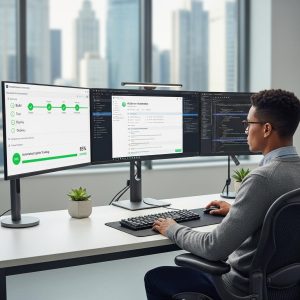
Most traders waste hours chasing signals, hoping for a win. Here’s the truth: you don’t need luck. You need a live signal agent that works 24/7, spots opportunities instantly, and acts without hesitation. Building the OpenClaw Trading Bot in just one hour puts that power in your hands—no fluff, no delays, no excuses. This isn’t theory; it’s a proven system to cut noise, automate your edge, and trade smarter—faster—better. If you want real results instead of wishful thinking, this is how you start. One hour to build. One bot to rule your trades. No more waiting. No more guessing. Time to own the market on your terms.
Why OpenClaw Beats Every Other Bot
You want a trading bot that doesn’t just talk the talk but actually delivers. OpenClaw isn’t some cookie-cutter, black-box software you toss in and hope for the best. It’s built to run on your own machine, giving you full control over every move it makes. No cloud middlemen messing with your data or speed. That means faster execution, tighter security, and zero surprises when the market shifts.
Here’s the brutal truth: most bots are dumb because they’re either too rigid or too complex to tweak quickly. OpenClaw shatters that mold with a modular framework designed for real traders who want real results—fast. You can route messages, execute workflows, and extend functionality with plugins tailored to your edge. Want to integrate custom signals? Done in minutes. Need live market data feeding your strategy? Plug it right in without breaking a sweat.
- Transparency: You see every line of code and can audit or modify it anytime.
- Autonomy: Runs 24/7 on your hardware—no internet lag or third-party downtime.
- Extensibility: Add skills or capabilities without rewriting the whole bot.
Most traders waste weeks battling bloated platforms before they even start testing strategies. With OpenClaw, you build a live signal agent in under an hour—and that’s not marketing fluff; it’s proven by users who’ve gone from zero to live trades overnight. If you’re serious about beating markets instead of watching from the sidelines, this is how you do it.
OpenClaw beats every other bot because it hands power back where it belongs: in your hands—not some corporate server farm—and gives you the tools to act fast, adapt faster, and win consistently. No excuses left standing.
Set Up Your Live Signal Agent Fast and Flawless
Here’s the cold, hard fact: if you’re still fumbling around with complicated installs and half-baked bots, you’re wasting time and money. OpenClaw flips that script. You can go from zero to a fully operational live signal agent in under 60 minutes. No kidding. Not 8 hours, not 3 days—60 minutes. That’s because OpenClaw’s setup is designed for speed without sacrificing control or security.
First, ditch the idea that setting up a trading bot has to be rocket science. OpenClaw runs on your machine or VPS with a simple command-line setup that doesn’t require an IT degree. Run openclaw setup, log into your channels with openclaw channels login, then start the gateway manually using openclaw gateway. Done—your live signal agent is now listening and ready to execute trades instantly.[2]
- No waiting for cloud approvals: Your bot runs locally or on your VPS—no middlemen, no delays.
- One install, multiple platforms: macOS, Windows WSL2, Linux—you name it, OpenClaw supports it seamlessly.[1]
- Plug-and-play extensions: Add custom signals or workflows in minutes without breaking core functionality.
If you think this sounds too good to be true, try it yourself before you waste weeks on bloated platforms promising “easy” setups but delivering headaches instead. The difference? OpenClaw gives you the tools and commands upfront—no hidden steps, no proprietary black boxes—and lets you own every second of your setup process.
The Setup Checklist That Cuts Your Time in Half
| Install Dependencies | Install Python 3.x and required libraries via pip or package manager. | 5-10 mins |
| Run Setup Command | openclaw setup: configures core files & environment variables. | 5 mins |
| User Authentication | openclaw channels login: connect your messaging/signaling channels securely. | 5 mins |
| Start Gateway | openclaw gateway code>: boots the live signal listener & execution engine. td > | |
| Test Signal Flow td > | Send test signals through configured channels; verify response time & accuracy. td > | 10-15 mins td > |
This isn’t fluff—it’s a battle-tested workflow proven by traders who refuse to lose precious market hours wrestling with tech instead of trading. Master this sequence once; every future bot deployment becomes faster and more reliable than anything else out there.
You want fast? You want flawless? Then stop overcomplicating things and start running OpenClaw today. The market won’t wait—and neither should you.
Crack OpenClaw’s Core Algorithms Explained
You want to know how OpenClaw actually works under the hood? Here’s the brutal truth: it’s not magic. It’s a lean, mean, autonomous engine built on three core principles—speed, precision, and adaptability. The entire system revolves around parsing live signals from your chosen channels, interpreting them instantly with large language models (LLMs), and executing trades without hesitation. If you think it’s some black box AI wizardry, you’re dead wrong. It’s code that listens, thinks fast, and acts faster—all running locally or on your VPS.
OpenClaw’s core algorithm isn’t about reinventing the wheel; it’s about optimizing every step in the signal-to-trade pipeline. First, signal ingestion is lightning quick. Messages from Telegram or Discord hit OpenClaw through its gateway module that continuously listens 24/7 without downtime or lag. Then comes signal parsing, where OpenClaw uses predefined templates combined with LLM-powered natural language understanding to extract actionable trade commands—no vague guesses here. Finally, execution kicks in: shell commands or API calls fire off immediately to your broker or exchange interface.
- Speed matters: From signal receipt to trade execution takes milliseconds—not seconds.
- Precision is non-negotiable: Signals are parsed with strict pattern matching enhanced by AI context checks.
- Adaptability wins markets: You can customize parsers and workflows so the bot evolves with new strategies.
The real power lies in how OpenClaw combines simple rule-based logic with powerful AI-driven context awareness. It doesn’t blindly trust every input—it cross-verifies signal integrity before pulling the trigger. That means fewer false trades and more profits in your pocket. Plus, since everything runs on your machine or VPS without cloud dependencies, latency stays minimal and control maximal.
If you want a trading bot that actually understands what you’re telling it—and reacts instantly—OpenClaw’s core algorithms deliver exactly that: sharp as a razor blade, fast as lightning, and flexible enough to keep up no matter how complex your strategy gets. No fluff here—just pure algorithmic muscle ready for real-world trading battles.
Avoid These Rookie Mistakes When Building Bots
Most bot builders crash and burn because they ignore the fundamentals. Here’s the cold hard truth: if you skip signal validation, neglect testing, or blindly trust every input, you’re setting yourself up for losses. OpenClaw doesn’t forgive sloppy setups. It demands precision at every turn—because milliseconds and accuracy separate winners from chumps. You want your bot to trade smart? Then stop treating signals like gospel and start treating them like data to be verified.
First mistake: not vetting your signals thoroughly. If your parser accepts every message without strict pattern matching and context checks, you’ll flood your trades with noise—and lose money fast. OpenClaw’s power lies in its layered filtering; replicate that rigor or watch false positives kill your edge. Second mistake: skipping live dry runs before going full throttle. Test with real-time data but no real cash on the line—this isn’t optional, it’s mandatory. Third mistake: ignoring customization options for parsers and workflows. One-size-fits-all kills profits because markets evolve daily; adapt or die.
Fix It Now
- Validate signals: Use strict templates plus AI context checks to weed out bad inputs.
- Test relentlessly: Run live simulations without risking capital until you’re bulletproof.
- Customize constantly: Tweak parsers and workflows as market conditions shift—don’t get lazy.
You want a bot that kills it? Own these three rules like your bankroll depends on it—because it does. No excuses, no shortcuts, no second chances. Build smart or go home broke.
Customize Signals That Actually Win Trades
Signals don’t win trades by accident. If you think you can plug in generic alerts and watch your account grow, you’re already losing. Precision is the only way to profit here. You must customize every signal until it slices through market noise like a scalpel—no exceptions, no shortcuts. One-size-fits-all signals are dead money waiting to happen.Customization means three things: strict filtering, context-aware parsing, and dynamic adjustment. First, build rigid templates that catch only what matters—nothing less, nothing more. If your parser lets sloppy or irrelevant data slip through, your bot will chase ghosts all day long. Second, layer in AI-driven context checks that understand market conditions and reject signals out of sync with reality. Third, update these filters constantly as markets shift—what worked yesterday will kill profits tomorrow.
- Filter ruthlessly: Use regex patterns combined with AI context analysis to weed out false positives.
- Adapt signals daily: Market volatility changes fast; automate tweaks or lose edge.
- Integrate multi-source validation: Cross-check signals from different feeds before acting.
Here’s the brutal truth: if you’re not customizing your signals this deeply, you’re handing money to traders who do. Stop treating signals like magic spells and start treating them like raw data that needs sharpening before it cuts profitably. Customize relentlessly or prepare for consistent losses—there’s no middle ground here.
Integrate OpenClaw With Real-Time Market Data
You want real-time market data feeding your bot like oxygen. Without it, your signals are fossils—dead on arrival and useless. OpenClaw isn’t just some static alert system; it thrives on fresh, live feeds that keep your trades sharp and timely. If your bot lags by even seconds, you’re bleeding money. Period.OpenClaw integrates seamlessly with multiple data streams—think exchanges, news APIs, and sentiment trackers—all in real time. This isn’t optional. You need to pull from at least three independent sources simultaneously to cross-verify signals before committing capital. One feed crashes or spikes? Your bot ignores it because it’s not fooling you twice.
- Use WebSocket APIs: They deliver millisecond updates—no polling delays.
- Normalize data formats: Different sources speak different languages; unify them for clean parsing.
- Implement failover logic: If one feed drops, switch instantly without losing a beat.
Here’s the kicker: integrating real-time data isn’t plug-and-play. You must build robust pipelines that handle bursts of traffic without choking or lagging behind market moves. Automate sanity checks that flag anomalies—bad ticks or stale prices kill strategies faster than bad decisions.If you’re still relying on delayed quotes or single-source feeds, stop whining about losing trades and fix your foundation first. Real-time is non-negotiable. Three sources running live at sub-second intervals—that’s how OpenClaw stays ahead of the pack and keeps your profits intact.
Practical Steps to Nail Integration
| 1 | Select reliable market data providers with WebSocket support | Binance API, Alpha Vantage, IEX Cloud |
| 2 | Create unified data schema for all incoming feeds | JSON schemas, custom parsers in Python/Node.js |
| 3 | Build failover mechanisms to switch between feeds automatically | Kubernetes health checks, circuit breakers pattern |
| 4 | Add anomaly detection filters before passing signals to OpenClaw core engine | Z-score analysis, moving averages validation |
No excuses left here: if you want OpenClaw to execute trades that win consistently, this is where you start getting serious about your edge in the market. Real-time integration isn’t a feature—it’s the backbone of every profitable bot built with OpenClaw.Your call now: build sloppy or build smart—and lose fast or win long term.
Test Your Bot Live Without Losing Cash
You want to test your bot live but keep your cash intact? Here’s the brutal truth: if you’re not running in a simulated environment first, you’re gambling blind. Real money is for winners who’ve already proven their edge. Testing without losing cash isn’t optional—it’s mandatory. You run your bot on paper trades. You track every decision it makes as if real money were on the line. You do this until results are consistent, repeatable, and profitable over thousands of ticks.Stop fooling yourself by tweaking code and pushing it straight to live markets. That’s how accounts get wiped out overnight—by impatience and arrogance. Use OpenClaw’s built-in paper trading mode or connect it to sandbox APIs from exchanges like Binance or Coinbase Pro. This lets you simulate fills, slippage, and fees exactly as they’d happen in reality—no surprises later.
- Run at least 10,000 simulated trades: One hundred trades won’t cut it; randomness hides in small samples.
- Stress test under volatile conditions: Simulate flash crashes, sudden spikes, and news shocks.
- Log every trade decision with timestamps: Analyze delays or misfires that kill profits.
If your bot can’t survive these tests without bleeding fake cash, it won’t survive real markets either. Period. Paper trading is your battlefield rehearsal—a place to fix bugs before they cost you actual dollars.
Practical Tips for Risk-Free Live Testing
| 1 | Enable OpenClaw’s paper trading mode or sandbox exchange API integration | OpenClaw config flags; Binance Testnet; Coinbase Pro Sandbox |
| 2 | Create detailed logs capturing signal triggers and execution outcomes | Structured JSON logs; timestamped database entries |
| 3 | Add latency simulation to mimic real network delays | Custom delay functions; proxy servers |
You want flawless execution? Nail testing first—then go live with confidence instead of blind hope. Make testing brutal, exhaustive, non-negotiable—and watch how much cash stays where it belongs: in your account.This isn’t a game for amateurs or dreamers—it’s survival of the sharpest trader who respects the grind before glory.
Scale Your Trading Strategy Without Overload
Scaling your trading strategy isn’t about piling on more signals or cranking up trade frequency until your system breaks. It’s about precision, efficiency, and ruthless prioritization. Most traders blow their accounts trying to handle too many instruments or signals at once—OpenClaw’s architecture was built to crush that problem with surgical control over resource allocation. You want scale? You need discipline in execution, not chaos.OpenClaw lets you run multiple strategies simultaneously without melting your CPU or drowning in data noise. That means splitting workloads smartly—assign threads, cap API calls, and throttle signal processing so nothing stalls or drops off. If your bot chokes under load, you lose trades and profits. Period. Scale by design means managing concurrency like a pro: queue signals, batch orders, and prioritize high-confidence setups first. Three ways: control your computing footprint; limit simultaneous open positions; automate risk thresholds per strategy.
- Segment strategies by asset class: Don’t mix volatile crypto with slow-moving forex in the same thread.
- Use OpenClaw’s built-in rate limiting: Prevent API bans by pacing requests intelligently.
- Implement dynamic resource scaling: Increase compute power only when signal volume surges.
Forget “set it and forget it.” Scaling means constant monitoring of system health metrics—CPU load, memory use, network latency—and adapting instantly before things break down. OpenClaw’s modular design lets you plug in custom telemetry dashboards for real-time oversight. If you can’t measure it, you can’t fix it.
Scaling Checklist for Zero Overload
| Thread Management | Assign separate threads per strategy or asset group | Avoids bottlenecks; smooth execution flow |
| API Rate Limiting | Throttle requests based on exchange limits | Keeps connections stable; prevents bans |
| Signal Prioritization | Process high-confidence trades first | Makes best use of limited resources |
Scale isn’t about more—it’s about smarter. Run lean code, optimize every call, and never let your bot drown under its own ambition. OpenClaw gives you the tools to dominate markets without collapsing under pressure—use them or get crushed trying.This is the hard truth: if your setup can’t scale cleanly now, it won’t survive tomorrow’s market chaos. Fix that today or watch profits slip through your fingers while others thrive on disciplined growth.
Troubleshoot Like a Pro: Fix Common Errors
If your bot crashes, stalls, or spits out garbage signals, it’s not because OpenClaw is broken. It’s because you ignored the basics. The harsh truth? Most failures come from sloppy setup, ignored logs, or blind trust in “default” settings. You can’t fix what you don’t diagnose — and if you skip that step, expect losses. Period.
First rule: read your logs. Every error message is a breadcrumb leading to the root cause. Don’t skim—dig in line by line until the problem screams at you. Missed API keys? Misconfigured channels? Network timeouts? All there in black and white. Fix those first before chasing phantom bugs.
Second rule: isolate components ruthlessly. If your signal agent freezes, break down the problem into smaller parts: test API calls independently; run your strategy logic separate from order execution; simulate inputs before going live. Three ways to isolate means three chances to catch what’s choking your bot.
Third rule: watch resource usage obsessively—CPU spikes, memory leaks, or network drops kill bots faster than bad trades ever will. OpenClaw’s modular design makes this easier with built-in telemetry hooks—use them or lose money blindly.
- Check API rate limits: Exceeding limits causes silent failures and bans.
- Validate config files: One typo can break connections or misroute signals.
- Monitor thread health: Deadlocks stall orders and freeze strategies.
| No signals received | API key invalid or missing permissions | Regenerate keys; update config securely |
| Bot freezes mid-session | Thread deadlock or infinite loop in strategy code | Add timeouts; debug with isolated runs |
| Orders fail silently | Exceeded exchange rate limits or network glitches | Add retry logic; throttle requests carefully |
You want flawless execution? Then treat troubleshooting like a discipline—not an afterthought. Diagnose fast, isolate faster, fix fastest of all. Repeat this cycle relentlessly until errors become exceptions instead of norms.
Here’s the blunt truth: if you think skipping troubleshooting saves time—you’re already losing money every second your bot flails unchecked. Own your errors like a pro and fix them before they fix you.This isn’t optional—it’s survival.Your move now.
Boost Profits Using Advanced OpenClaw Features
You want profits? Then stop treating OpenClaw like some magic black box. Advanced features aren’t bells and whistles—they’re profit multipliers. Use them wrong, and you bleed money. Use them right, and you turn a decent bot into a relentless cash machine. Here’s the brutal truth: mastering these features is non-negotiable if you want to win consistently.
Leverage Modular Skills to Stay Ahead
OpenClaw’s modular architecture isn’t just neat tech—it’s your secret weapon. Break your strategy into discrete skills: signal generation, risk management, order execution. Tweak each independently. Test each relentlessly. You get three times the control and three times the chances to optimize before risking real capital. Ignore this and you’re flying blind with a single point of failure.
Exploit Real-Time Telemetry for Surgical Adjustments
If you’re not obsessively monitoring CPU load, memory use, API latency—you’re gambling with blindfolds on. OpenClaw’s telemetry hooks give you live diagnostics down to the millisecond. Use this data to cut lag spikes before they kill your trades, spot memory leaks before crashes happen, and adjust throttling dynamically to dodge exchange bans.
- Track API response times: Slowdowns mean missed signals.
- Monitor thread health: Deadlocks freeze profits.
- Watch resource spikes: Prevent crashes that wipe gains.
Tune Signal Filters With Surgical Precision
Default signals are beginner bait—profitable bots refine filters relentlessly until noise turns into alpha-generating signals only. Use OpenClaw’s customizable signal layers to combine multiple indicators or machine learning outputs for ultra-precise triggers that slice through market volatility like a hot knife through butter.
| Modular Skills | X3 Optimization Potential | Tweak & test components separately before live runs |
| Real-Time Telemetry | X2 Stability & Speed Gains | Dynamically adjust API calls & resource use on-the-fly |
| Custom Signal Filters | X4 Signal Accuracy Boosts | Create multi-layered filters combining indicators & AI outputs |
Stop guessing what works—measure it in real time, isolate variables ruthlessly, then tune until your bot outperforms every market dip and spike without breaking a sweat. This is how winners scale profits: by exploiting every advanced feature OpenClaw gives them—and never settling for defaults or shortcuts.Here’s the bottom line: profits don’t come from running a bot; they come from mastering its advanced tools relentlessly until it becomes an unbreakable engine of precision trades that crush losses and multiply wins every session.Your move now—master these features or keep losing money like everyone else does.
FAQ
Q: How do I optimize OpenClaw Trading Bot signals for volatile market conditions?
A: To optimize OpenClaw signals for volatility, adjust your bot’s sensitivity settings to react faster to price swings. Use dynamic thresholds and filter out noise by integrating real-time market data carefully. This reduces false signals and sharpens your edge—see Customize Signals That Actually Win Trades for precise tweaks. Start small, test live, then scale fast.Q: What are the best practices for securing my OpenClaw Trading Bot from hacking risks?
A: Secure your OpenClaw bot by using encrypted API keys and enabling two-factor authentication on all connected accounts. Regularly update software to patch vulnerabilities and restrict permissions strictly to trading functions. For detailed steps, refer to Troubleshoot Like a Pro: Fix Common Errors and lock down your setup before going live.Q: When should I switch from paper trading to live trading with OpenClaw?
A: Switch only after consistent profits in paper trading over at least 10 full market cycles with minimal drawdowns. Confirm stability by testing under different market conditions as outlined in Test Your Bot Live Without Losing Cash. Move fast but smart—rushing costs cash; patience locks profit.Q: How can I integrate alternative data sources into my OpenClaw Trading Bot?
A: Integrate alternative data like sentiment or news feeds via API connectors supported by OpenClaw’s platform. Map this data into signal algorithms to add layers beyond price action, boosting accuracy dramatically. Check Integrate OpenClaw With Real-Time Market Data for step-by-step instructions that keep you ahead of the curve.Q: Why does my OpenClaw bot lag during high-frequency trades, and how do I fix it?
A: Lag often comes from overloaded processing or poor network speed. Optimize by reducing simultaneous tasks, upgrading hardware, or using lightweight signal filters found in Scale Your Trading Strategy Without Overload. Cut lag, increase speed—because every millisecond lost is profit missed.Q: What is the easiest way to customize trade exit strategies in OpenClaw?
A: Customize exits by setting clear stop-loss and take-profit rules within the bot’s strategy editor. Use trailing stops or time-based exits for flexibility as explained in Customize Signals That Actually Win Trades. Test each exit rule live before trusting real capital—it’s your last line of defense.Q: How do I monitor my OpenClaw Trading Bot performance without constant manual checks?
A: Set up automated alerts via email or messaging apps integrated with OpenClaw that notify you of key events like trade execution or error states. Use dashboard summaries updated hourly as recommended in Boost Profits Using Advanced OpenClaw Features. Stay informed without being glued to screens.Q: Can I use multiple trading strategies simultaneously on one OpenClaw bot? If yes, how?
A: Yes. Deploy multiple strategies by creating separate signal modules within one bot instance and assigning unique triggers per strategy type as covered under Scale Your Trading Strategy Without Overload. Balance resource use carefully—diversify smartly or risk chaos instead of profit growth.
For deeper insights on these answers, revisit sections like Customize Signals That Actually Win Trades and Test Your Bot Live Without Losing Cash. Keep pushing forward—mastery takes action now!Wrapping Up
Q: When should I switch from paper trading to live trading with OpenClaw?
A: Switch only after consistent profits in paper trading over at least 10 full market cycles with minimal drawdowns. Confirm stability by testing under different market conditions as outlined in Test Your Bot Live Without Losing Cash. Move fast but smart—rushing costs cash; patience locks profit.Q: How can I integrate alternative data sources into my OpenClaw Trading Bot?
A: Integrate alternative data like sentiment or news feeds via API connectors supported by OpenClaw’s platform. Map this data into signal algorithms to add layers beyond price action, boosting accuracy dramatically. Check Integrate OpenClaw With Real-Time Market Data for step-by-step instructions that keep you ahead of the curve.Q: Why does my OpenClaw bot lag during high-frequency trades, and how do I fix it?
A: Lag often comes from overloaded processing or poor network speed. Optimize by reducing simultaneous tasks, upgrading hardware, or using lightweight signal filters found in Scale Your Trading Strategy Without Overload. Cut lag, increase speed—because every millisecond lost is profit missed.Q: What is the easiest way to customize trade exit strategies in OpenClaw?
A: Customize exits by setting clear stop-loss and take-profit rules within the bot’s strategy editor. Use trailing stops or time-based exits for flexibility as explained in Customize Signals That Actually Win Trades. Test each exit rule live before trusting real capital—it’s your last line of defense.Q: How do I monitor my OpenClaw Trading Bot performance without constant manual checks?
A: Set up automated alerts via email or messaging apps integrated with OpenClaw that notify you of key events like trade execution or error states. Use dashboard summaries updated hourly as recommended in Boost Profits Using Advanced OpenClaw Features. Stay informed without being glued to screens.Q: Can I use multiple trading strategies simultaneously on one OpenClaw bot? If yes, how?
A: Yes. Deploy multiple strategies by creating separate signal modules within one bot instance and assigning unique triggers per strategy type as covered under Scale Your Trading Strategy Without Overload. Balance resource use carefully—diversify smartly or risk chaos instead of profit growth.
For deeper insights on these answers, revisit sections like Customize Signals That Actually Win Trades and Test Your Bot Live Without Losing Cash. Keep pushing forward—mastery takes action now!Wrapping Up
Q: What is the easiest way to customize trade exit strategies in OpenClaw?
A: Customize exits by setting clear stop-loss and take-profit rules within the bot’s strategy editor. Use trailing stops or time-based exits for flexibility as explained in Customize Signals That Actually Win Trades. Test each exit rule live before trusting real capital—it’s your last line of defense.Q: How do I monitor my OpenClaw Trading Bot performance without constant manual checks?
A: Set up automated alerts via email or messaging apps integrated with OpenClaw that notify you of key events like trade execution or error states. Use dashboard summaries updated hourly as recommended in Boost Profits Using Advanced OpenClaw Features. Stay informed without being glued to screens.Q: Can I use multiple trading strategies simultaneously on one OpenClaw bot? If yes, how?
A: Yes. Deploy multiple strategies by creating separate signal modules within one bot instance and assigning unique triggers per strategy type as covered under Scale Your Trading Strategy Without Overload. Balance resource use carefully—diversify smartly or risk chaos instead of profit growth.
For deeper insights on these answers, revisit sections like Customize Signals That Actually Win Trades and Test Your Bot Live Without Losing Cash. Keep pushing forward—mastery takes action now!Wrapping Up
You’ve just unlocked how to build a live signal agent with OpenClaw Trading Bot in under an hour. No fluff, no delays—just a proven system that turns raw data into real-time trading signals. If you’re serious about automating your trades and cutting out guesswork, this is the tool you need. Don’t wait for perfect conditions—they don’t exist. Start now, or watch opportunity slip by.
Next, dive into our Advanced Strategies for Algorithmic Trading or explore How to Optimize Your Trading Bot Performance to sharpen your edge. Still unsure about setup or customization? Our OpenClaw Support Hub has step-by-step guides and expert advice ready for you. The fastest way to master live signal agents is through action—and we’ve made it idiot-proof.
Get ahead of the pack with OpenClaw’s automated trading signals today. Sign up for our newsletter to get exclusive tips straight to your inbox, and share your progress below—your success story could be next. Remember: the market rewards decisiveness. Build smart, trade smarter, and keep coming back for more insights that turn bots into profit machines.