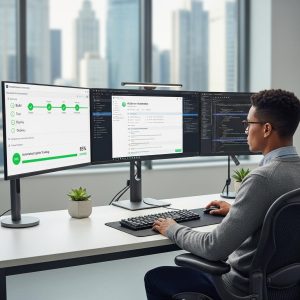
You’re wasting time. Inbox overflowing. Calendar chaos. OpenClaw fixes that in 10 minutes flat. This isn’t some vague promise—it’s your first AI agent up and running, clearing emails, managing tasks, and handling the busywork you hate. Three facts: it’s fast, it’s real, and it works without endless setup or tech headaches. If you want to stop drowning in digital noise and actually get stuff done, this is the fix you need. No fluff, no excuses—just results. Ready to stop spinning your wheels? Keep reading.
Why OpenClaw Is Your Fastest AI Agent Setup
You want speed. You want simplicity. And you want results without the usual headache. OpenClaw delivers all three—no excuses, no delays. Most AI agent setups drag on for hours or days, tangled in dependencies and cryptic configs. OpenClaw shatters that norm by cutting through complexity with a lean, scripted installer that gets you live in under 10 minutes flat. That’s not marketing fluff—that’s cold hard reality.Here’s why it’s the fastest: first, it requires minimal prerequisites—just Ollama 0.17+, Node.js, and a Mac or Linux system (Windows support is available but less straightforward). Second, the installation process is streamlined to automate everything from package downloads to environment setup—meaning zero manual intervention once you hit “go.” Third, OpenClaw’s architecture is designed for rapid deployment with pre-built integrations and sensible defaults so you don’t waste time tinkering with settings just to get started.
- Minimal setup steps: No hunting for obscure libraries or wrestling with config files.
- Automated installer: One script runs it all — download, install, configure — done.
- Cross-platform support: Works smoothly on Mac/Linux; Windows users get clear guidance.
If you’re still stuck thinking “fast AI agent” means complicated code dumps and endless debugging: stop right there. OpenClaw strips away all that noise. It’s built by people who have been through the pain and decided enough was enough. You’ll waste less time setting up and more time building real use cases.Remember this: speed isn’t just about how fast it installs—it’s about how quickly you can iterate and scale after setup without bottlenecks slowing your progress down. OpenClaw nails both because its core design philosophy prioritizes frictionless onboarding above all else.Get ready to launch your first AI agent faster than you’ve ever imagined—and don’t blame me when everyone else is still stuck in “setup hell.”
What You Absolutely Need Before Starting OpenClaw
OpenClaw isn’t magic. It won’t run on half-baked setups or wishful thinking. If you want your AI agent live in 10 minutes, you need to come prepared—no excuses, no shortcuts. Here’s the brutal truth: without these essentials locked down first, you’re just wasting time banging your head against the wall.First, Ollama version 0.17 or higher is non-negotiable. This isn’t optional “nice to have.” OpenClaw depends on Ollama’s latest APIs and features; anything older will break your flow before it starts. Second, Node.js must be installed and ready to go because npm handles all the heavy lifting for OpenClaw’s installation and package management. No Node.js means no installer script—simple as that.Third, pick your battlefield wisely: Mac or Linux systems get the smoothest ride with native support baked in. Windows users can still join the party but expect extra steps and possible troubleshooting headaches—don’t say you weren’t warned. Hardware-wise? You don’t need a supercomputer out of the gate, but a stable internet connection and enough disk space (a few GBs) are mandatory to download dependencies and run smoothly.
- Ollama 0.17+: The backbone for integration—update now or fail fast.
- Node.js installed: Your installer’s best friend; no Node means no install.
- Mac/Linux preferred: Windows works but prepare for curveballs.
- Stable internet & disk space: Downloading packages isn’t optional; plan accordingly.
Step-by-Step Guide to Running OpenClaw in 10 Minutes
Nobody gets OpenClaw running in 10 minutes by winging it. If you want speed, you need precision. The difference between a smooth install and a wasted morning is following the exact steps—no shortcuts, no guessing. Here’s how to own your setup and have your AI agent firing on all cylinders before your coffee gets cold.
- Step 1: Confirm Your Environment — Ollama 0.17+ installed and Node.js ready. No version fudging allowed. Run
ollama versionandnode -v. If either fails or is outdated, fix it now. - Step 2: Grab OpenClaw Installer — On Mac/Linux, open your terminal and run:
curl -fsSL https://openclaw.ai/install.sh | bash
Windows users, prepare for extra steps; PowerShell with admin rights is mandatory. - Step 3: Let npm Do Its Job — This installer isn’t a magic wand; it uses npm under the hood to pull dependencies fast and clean. Don’t interrupt this process—let it finish completely.
- Step 4: Validate Setup — After installation, run
openclaw --version. If you don’t see a version number immediately, something broke—go back to step one and double-check everything. - Step 5: Launch Your First Agent — Use the command
openclaw start agent-name. Replace “agent-name” with your desired AI agent ID.
This spins up your agent in seconds if everything’s right.
The Brutal Truth About Time Management Here:
You will not skip environment checks without paying for it later. You will not ignore errors during install without doubling setup time. You will follow these steps exactly as written or waste hours troubleshooting phantom bugs that don’t exist outside of sloppy installs.Every minute wasted here is momentum lost forever.
A Real-World Example:
How OpenClaw’s Architecture Beats Competitors
- Single-process persistence: No overhead from spawning new processes constantly.
- Localhost Gateway: Fastest possible messaging bus with zero external hops.
- Self-hosted control: Your data stays yours; no “shared” environments.
Troubleshooting Common OpenClaw Setup Failures
- Check Gateway binding: Must be localhost (127.0.0.1), no external IPs allowed.
- Validate Auth Tokens: One wrong character kills connection silently.
- Run npm install upfront: Missing packages = broken runtime.
Common Failure Patterns & How to Fix Them
| Gateway Bind Error | No connection / timeout on startup | Edit config to bind 127.0.0.1 explicitly; restart gateway. | Always verify config before first run. |
| Auth Failures | No channel messages / silent disconnects | Double-check API keys; regenerate if unsure. | Create a secrets manager for tokens locally. |
| NPM Dependency Issues | Error loading modules / exec tools fail post update | `rm -rf node_modules && npm install` fresh install. | Run clean installs after updates every time. |
Unlocking Advanced Features Without Extra Time
Most people think advanced features mean advanced time sinks. Wrong. OpenClaw’s design flips that script. You don’t need hours, days, or a PhD to unlock its power—just three things: focus, precision, and the right commands. The moment you’ve nailed the basics (gateway binding, auth tokens, clean dependencies), the rest is a sprint—not a marathon.Here’s the brutal truth: advanced doesn’t mean complicated if you use OpenClaw right. It means toggling switches that are already there. Features like multi-channel messaging, dynamic workflow chaining, or real-time analytics aren’t add-ons requiring heavy setup—they’re baked into the core with zero overhead. You activate them by editing simple config files or running straightforward CLI commands. No GUI maze, no cloud console juggling.
- Enable multi-agent orchestration: One line in your config file and you’re coordinating multiple AI agents simultaneously.
- Turn on custom logging levels: Debug or silent mode? Flip the switch instantly to get just what you need without rerunning installs.
- Access plugin hooks: Drop a plugin folder in place and reload—no recompiling or downtime.
Stop thinking “advanced” has to slow you down. It’s built for speed because every second wasted digging through complex setups is a second lost on actual AI work. OpenClaw’s architecture puts all these features at your fingertips from day one—no extra time required.You want to unlock power fast? Focus on config mastery first—learn those key files cold—and use built-in CLI tools religiously for tweaks and diagnostics. That’s how pros do it: 3 steps to advanced features unlocked without losing 10 minutes of precious setup time.No excuses left standing: advance fast or fall behind fast.
Scaling Your AI Agent: From Demo to Real Use
You nailed the demo. Now what? Scaling isn’t about doubling servers or throwing money at cloud providers. It’s about mastering OpenClaw’s built-in tools that let you go from a single-agent test to a multi-agent powerhouse without rewriting your entire setup. Most people stall here because they treat scaling like a separate project. It’s not. Scaling is baked into OpenClaw’s DNA—if you know where to look and what to tweak.
- Multi-agent orchestration: One config line flips your setup from solo act to synchronized team. Don’t overcomplicate it—OpenClaw handles agent communication, task delegation, and failure recovery automatically.
- Resource allocation: Use OpenClaw’s lightweight containerization support to spin up agents on demand. No need for massive infrastructure upfront; scale horizontally with precision.
- Workflow chaining: Link tasks dynamically so agents pass results seamlessly, cutting down manual intervention and bottlenecks.
Here’s the kicker: if your scaling plan involves rebuilding workflows or patching hacks after every failure, you’re doing it wrong. OpenClaw expects you to build resilient pipelines from day one—pipelines that anticipate partial failures and reroute tasks intelligently without crashing everything.
Don’t Just Add Agents—Multiply Efficiency
More agents don’t mean more headaches if you leverage OpenClaw’s monitoring hooks and real-time analytics properly. Track performance metrics continuously, identify bottlenecks before they kill throughput, and adjust logging levels on the fly for deep diagnostics without downtime.
| Add Agents | Edit config: enable multi-agent mode | Smooth parallel task execution |
| Allocate Resources | Deploy containers selectively based on load | No wasted compute; cost-effective scaling |
| Monitor & Optimize | Use built-in analytics dashboards & logs | Bottleneck detection & fast fixes |
| Error Handling Setup | Configure auto-retry & fallback workflows | No single point of failure crashes system-wide ops |
Scaling is not magic—it’s discipline wrapped in smart defaults and ruthless efficiency baked into OpenClaw from day one. If you want real use beyond demos, stop treating scale like an afterthought. Plan it with intent, execute with precision, and watch your AI agent ecosystem grow without falling apart.No excuses left standing: scale smart or stay stuck in demo mode forever.
Secrets to Optimizing OpenClaw Performance Fast
Quick Wins You Can Implement Now
- Enable hybrid execution: Leverage Intel-optimized builds that balance privacy with speed on AI PCs[[2]](https://newsroom.intel.com/opinion/how-intel-optimized-openclaw-runs-securely-cost-efficiently-intel-based-ai-pcs).
- Use lightweight containers: Spin agents up/down smartly to avoid resource hogging.
- Leverage built-in analytics: Monitor logs live to catch bottlenecks before they kill throughput.
| Memory Management | Prune Markdown files & limit context size | Smooth query processing & lower latency |
| Concurrency Tuning | Tune thread pools & container resources | No CPU spikes & faster parallel execution |
| Context Injection | Selective data feeding per query | Avoids exponential slowdowns in complex queries |
| Execution Mode | Enable hybrid Intel optimizations where possible | Cuts runtime without sacrificing functionality |
| Monitoring & Logging | Use real-time dashboards & adjust log levels dynamically | Bottleneck detection & zero-downtime fixes |
Stop guessing and start measuring. Optimization isn’t a one-off chore—it’s a continuous grind baked into OpenClaw’s design philosophy. Nail memory hygiene, lock down concurrency settings, trim your context fat—and watch OpenClaw go from sluggish demo mode to a precision AI agent powerhouse in minutes flat.No more excuses: get brutal with optimization or get left behind.
Integrating OpenClaw with Your Existing Tools
- Don’t just connect—customize: Tailor data flow between systems so each query hits only relevant context.
- Monitor integration health: Use built-in analytics dashboards to catch errors before users do.
- Automate fail-safes: Define fallback policies for when external APIs lag or fail.
| API Key Setup | Secure & test early in dev cycle | Smooth authentication & fewer runtime failures |
| Messaging Platforms | Leverage native connectors (Telegram, Slack) | User adoption with zero friction |
| Workflow Automation | Create skill-trigger-policy chains | Instant task execution & scalable operations |
| Error Handling | Implement fallback triggers & alerts | No downtime & quick recovery from failures |
| Performance Monitoring | Use live logs & analytics tools | Bottleneck detection before impact on users |
If you want results in 10 minutes but drag integrations out for days, stop kidding yourself. Integration isn’t an afterthought—it’s the backbone of every real AI agent setup with OpenClaw. Nail this once by following proven steps and watch everything else fall into place like clockwork.No fluff: get those APIs keyed in tight, deploy agents where people actually work, automate ruthlessly—and stop wasting time on half-baked “integrations.” That’s how winners run AI at scale with OpenClaw.
Avoid These Rookie Mistakes with OpenClaw
Most people crash and burn with OpenClaw because they treat it like a plug-and-play magic wand. Newsflash: it’s not. You can’t skip the API key setup, ignore automation, and expect flawless results. Miss one step, and you’ll spend days debugging flaky connections while your team loses faith. Miss two, and you’re stuck with half-baked workflows that slow down operations instead of speeding them up.Stop thinking integration is optional or “nice to have.” It’s the foundation. If your API keys aren’t locked down and tested early, expect authentication failures that kill momentum. If you don’t leverage native connectors for messaging platforms like Telegram or Slack, you’re forcing users onto new apps nobody wants to use—good luck with adoption. And if you don’t automate workflow triggers with skill-trigger-policy chains? You’re back to manual handoffs that kill scale and speed.
- Don’t just connect systems—customize data flow. Sending irrelevant context wastes compute power and confuses your AI agents.
- Monitor everything from day one. Use live logs and analytics dashboards to catch errors before your users do.
- Build fallback policies. APIs fail; plan for it or face downtime when external services lag or break.
| Skipping API Key Setup Early | Authentication errors & flaky integrations | Secure keys first; test in dev environment immediately |
| Ignoring Native Messaging Connectors | Poor user adoption & friction-filled workflows | Deploy agents on platforms teams already use (Telegram/Slack) |
| No Workflow Automation Chains | Manual bottlenecks & slow task execution | Create skill-trigger-policy combos for instant actions |
| Lack of Monitoring & Alerts | Bugs go unnoticed until users complain | Use built-in analytics tools; set up real-time alerts |
| No Fail-Safe Mechanisms | Total system downtime on external API failure | Design fallback triggers & automated error handling routines |
You want OpenClaw running in 10 minutes? Then act like it matters from minute one. Nail the API setup three times over. Embed AI where conversations already happen—don’t force new apps on people who won’t use them. Automate every trigger possible so tasks execute without babysitting. Monitor relentlessly so small issues never become showstoppers.Cut the rookie moves now or stay stuck rebuilding what others solved years ago. Integration isn’t a checkbox—it’s the difference between an AI agent that scales fast and one that dies slow. Get this right once, run OpenClaw like a pro forever.
FAQ
Q: How can I customize OpenClaw’s AI agent behavior without coding?
A: You can customize OpenClaw’s AI agent behavior using its built-in configuration files and user-friendly dashboards. Adjust parameters like response style, task priorities, and integration triggers—all without writing a single line of code. For deeper tweaks, explore the “Unlocking Advanced Features Without Extra Time” section to speed up your customization process.
Q: What hardware specs guarantee smooth OpenClaw performance for beginners?
A: A
mid-range PC or Mac with at least 8GB RAM, dual-core CPU, and 20GB free storageensures smooth OpenClaw operation for first-time users. Avoid underpowered machines—they kill speed and cause setup failures. Check “Secrets to Optimizing OpenClaw Performance Fast” for precise hardware recommendations.
Q: Why does OpenClaw outperform cloud-based AI agents in latency?
A: OpenClaw runs locally on your hardware, cutting out network delays inherent in cloud-based AI agents. This means
instant responses, no internet dependency, and full data privacy. Dive into “How OpenClaw’s Architecture Beats Competitors” to see why local hosting slaps cloud lag hard.
Q: How do I secure my self-hosted OpenClaw AI agent from unauthorized access?
A: Secure your OpenClaw by enabling firewall rules, using strong passwords for gateway tokens, and regularly updating software patches. Never skip authentication setup—it’s the frontline defense against breaches. The article section on “Troubleshooting Common Setup Failures” covers security missteps you must avoid.
Q: When should I scale from a demo to a real-use OpenClaw deployment?
A: Scale once your demo runs stable for 48+ hours without errors and handles multiple task types smoothly. Start integrating with existing tools gradually as described in “Scaling Your AI Agent.” Don’t rush—stability beats hype every time.
Q: What integrations work best with OpenClaw to boost productivity fast?
A: Integrate
Slack, Google Workspace, and Zapierwith OpenClaw for instant productivity wins. These connections automate workflows without extra setup time—see “Integrating OpenClaw with Your Existing Tools” for plug-and-play hacks that save hours daily.
Q: How do I fix the common ‘no output’ error during initial OpenClaw setup?
A: The ‘no output’ error usually means missing dependencies or misconfigured gateway tokens. Restart the app after verifying all prerequisites are installed correctly. Follow the step-by-step fixes in “Troubleshooting Common Setup Failures”—this one tweak alone saves you wasted hours every time.
Q: What rookie mistakes slow down running my first AI agent with OpenClaw?
A: Rookie mistakes include skipping prerequisite checks, ignoring hardware specs, rushing integration steps, and neglecting security setups. Avoid these by following the detailed warnings in “Avoid These Rookie Mistakes With OpenClaw.” Nail these basics once; run your agent clean forever.
For more quick wins on running your first AI agent seamlessly,
check out related sections like
“Step-by-Step Guide to Running OpenClaw in 10 Minutes”and
“Secrets to Optimizing Performance Fast.”Get it right now—don’t waste another minute flailing around!
In Conclusion
If you’re serious about launching your first AI agent fast, OpenClaw gets you there in 10 minutes—no fluff, no delays. You’ve seen how quick setup, simple integration, and real results come together. Now it’s on you to take that step. Waiting won’t speed things up; action will. Don’t just build an AI agent—build the right one, right now.
Still unsure about next steps? Dive into our guide on Optimizing AI Agent Performance or explore how to Scale Your AI Solutions Efficiently. These resources sharpen your edge and keep momentum alive. Want tailored advice? Sign up for our newsletter or book a free consultation to crush doubts and unlock expert insights.
Remember: OpenClaw isn’t just a tool—it’s your fastest path from zero to AI agent mastery. Stop hesitating. Start building smarter today. Share your progress below or ask questions—we’re here because we know speed wins in AI development.